

Blog / Automotive Service and Parts

Signs Your Brakes Need Service

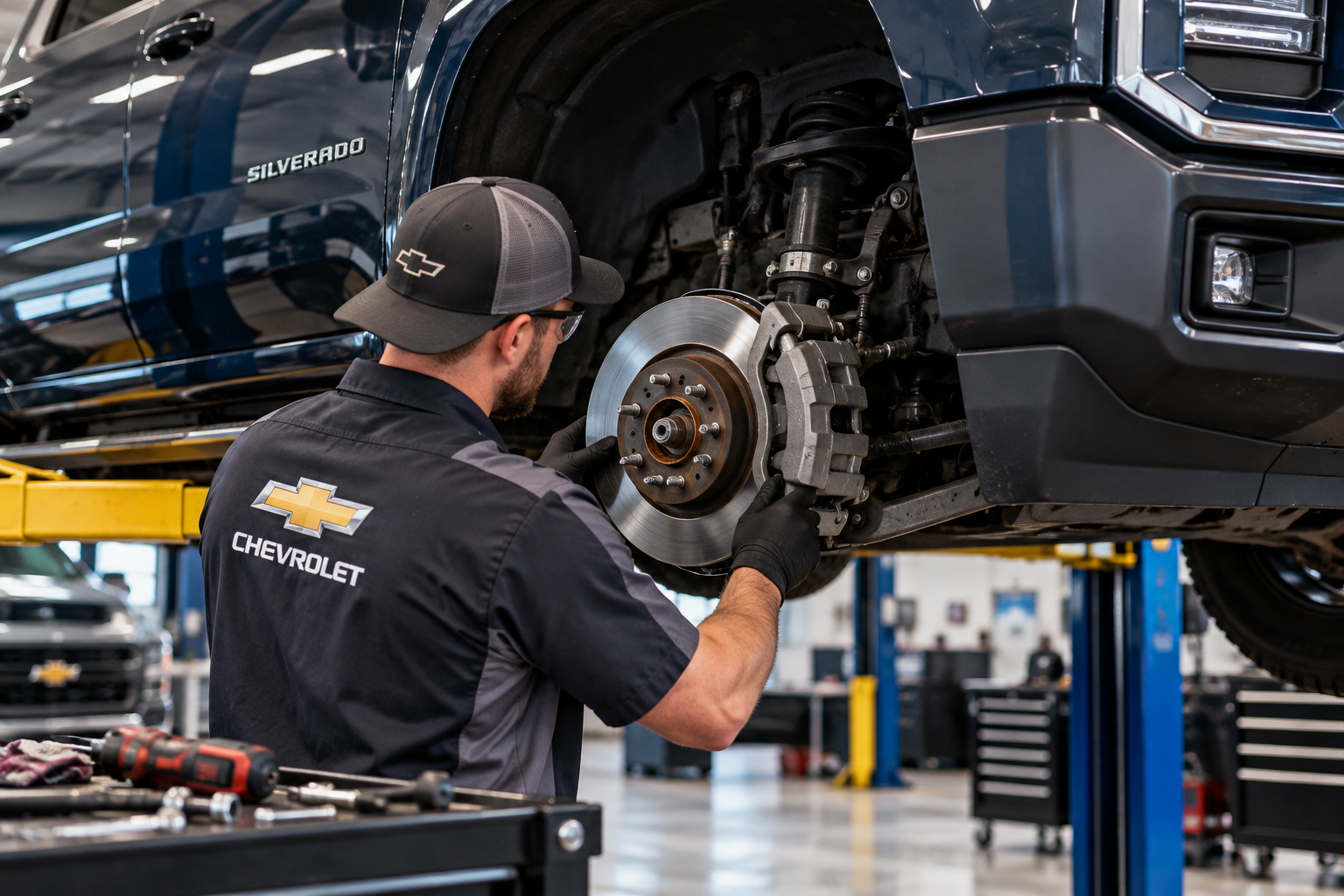
tech-checking-out-brakes-on-a-chevrolet

Your brakes are the single most important safety system on your vehicle. Recognizing the signs of bad brakes early can prevent a minor issue from becoming a dangerous and expensive brake failure on Yakima Valley roads. Here is your complete guide to the eight most important warning signs that your brakes need service from our team at C Speck Motors in Sunnyside.

8 Warning Signs Your Brakes Need Service

Warning Sign 1: Squealing or Squeaking When You Stop

A high-pitched squealing or squeaking sound when you apply the brakes is one of the earliest warning signs of worn brake pads. Why do your brakes squeal when you stop? Most brake pads include a small metal wear indicator tab that contacts the rotor when the pad wears to a critical minimum thickness. That metal-on-metal contact produces the distinctive squealing sound specifically designed to alert you that brake pad replacement is needed. Do not ignore a squealing sound as worn pads that go unaddressed will quickly progress to the more serious grinding condition.

Warning Sign 2: Grinding or Growling Noise When Braking

A grinding noise when braking is a more serious warning sign than squealing and requires immediate professional attention. This sound indicates your brake pads have worn completely through to bare metal. When brake pads wear through the metal backing plate contacts the rotor surface directly causing rapid and expensive rotor damage. A grinding noise when braking requires immediate brake repair at C Speck Motors and should not be driven on any longer than absolutely necessary.

Warning Sign 3: Steering Wheel Shakes When Braking

A steering wheel that shakes when braking typically indicates warped or unevenly worn brake rotors on your front axle. Brake rotors can warp from overheating during prolonged heavy braking on long downhill grades or from repeated hard stops during towing operations. The vibration occurs because the warped rotor surface creates an inconsistent contact area between the rotor and brake pads during braking. Warped rotors require professional resurfacing or replacement at C Speck Motors to restore smooth and consistent braking performance.

Warning Sign 4: Vehicle Pulling to One Side During Braking

If your vehicle pulls noticeably to the left or right when you apply the brakes your braking system is not applying equal force to both sides. Uneven braking force can be caused by a stuck caliper, uneven pad wear, or contaminated brake pads from a fluid leak. This condition is both a brake system warning sign and a serious vehicle control safety concern. Never ignore a vehicle that pulls to one side during braking as it significantly compromises your ability to control your vehicle during emergency stops.

Warning Sign 5: Soft, Spongy, or Low Brake Pedal

A brake pedal that feels soft, spongy, or travels further toward the floor than normal is a serious warning sign of a brake hydraulic system problem. A soft or spongy brake pedal typically indicates air in the brake lines, a brake fluid leak, or a failing master cylinder. This condition directly reduces your braking effectiveness and can lead to complete brake failure in severe cases. A soft or spongy brake pedal requires immediate professional diagnosis at C Speck Motors and should not be driven on without addressing the underlying cause.

Warning Sign 6: Brake Warning Light on Your Dashboard

A brake warning light illuminated on your dashboard is a direct signal from your vehicle's monitoring systems that your brake system requires professional attention. The brake warning light can indicate a low brake fluid level, a hydraulic pressure imbalance, or brake pads that have reached the minimum service specification. Any illuminated brake warning light that does not extinguish after releasing the parking brake requires immediate professional diagnosis at C Speck Motors in Sunnyside.

Warning Sign 7: Burning Smell After Driving

A sharp burning or chemical smell coming from your wheels after driving can indicate overheated brakes from extended downhill driving or heavy braking situations. Brake overheating causes brake fade which is a temporary but dangerous reduction in braking effectiveness caused by excessive heat in the brake system. Repeated overheating causes permanent damage to brake pads, rotors, and brake fluid leading to significantly more expensive repairs. If you notice a burning smell after towing or mountain driving bring your vehicle to C Speck Motors for a complete brake inspection as soon as possible.

Warning Sign 8: Vehicle Takes Longer to Stop Than Normal

If your vehicle takes significantly longer to stop than you are accustomed to your brakes are not performing at their full designed effectiveness. Increased stopping distances can be caused by worn brake pads, contaminated brake fluid, a partially seized caliper, or air in the brake lines. This warning sign is especially dangerous because longer stopping distances directly reduce your safety margin during emergency braking situations on Yakima Valley roads. Any noticeable increase in your vehicle's stopping distance requires immediate professional brake repair at C Speck Motors in Sunnyside.

How Often Should You Have Your Brakes Checked?

Many drivers wait until they notice a warning sign before having their brakes inspected but proactive brake checks are always a smarter and safer approach. Here is our recommended brake inspection schedule for Yakima Valley and Tri-Cities drivers:

Every 12 Months or 12,000 Miles
Have your brakes visually inspected at least once per year or every 12,000 miles under normal everyday driving conditions. An annual brake inspection catches developing brake issues before they progress into more expensive and dangerous brake failures. Our service team at C Speck Motors includes a visual brake inspection as part of every multi-point vehicle inspection during routine service visits.

Every Oil Change Visit
Ask our service team at C Speck Motors to perform a quick visual brake inspection during every oil change visit. Checking brake pad thickness and rotor condition during every oil change is a simple and free way to stay on top of your brake system condition throughout the year. Catching brake pad wear early allows you to plan and budget for brake service before your pads reach the critical wear threshold.

Before Any Long Road Trip
Always have your brakes inspected before any long road trip that involves mountain pass crossings or extended downhill grades on Eastern Washington routes. Mountain pass driving on US-12, the Yakima Canyon, and Cascade routes puts significantly more demand on your brake system than normal everyday driving. Our service team at C Speck Motors can perform a quick brake inspection before any planned long trip departure from Sunnyside.

After Heavy Towing or Hauling
Have your brakes inspected after any extended heavy towing or hauling operation that puts significant additional demands on your brake system. Heavy towing accelerates brake pad wear and can cause rotor warping or heat damage that is not immediately apparent during normal light-duty driving conditions. Our service team at C Speck Motors can evaluate your brake condition after any demanding towing or hauling operation across Eastern Washington.

How Long Do Brakes Last?

Brake pad life varies significantly based on your specific driving conditions and habits. Here is a general guide for Yakima Valley and Tri-Cities drivers:

Driving Condition Expected Brake Pad Life
Normal City and Highway Commuting 30,000 to 70,000 miles
Frequent Stop-and-Go City Driving 20,000 to 40,000 miles
Regular Heavy Towing or Hauling 15,000 to 30,000 miles
Mountain Pass and Downhill Driving 15,000 to 25,000 miles
Combined Towing and Mountain Driving 10,000 to 20,000 miles

Yakima Valley drivers who regularly tow heavy loads or travel mountain pass routes should inspect their brakes more frequently than standard manufacturer service intervals suggest for normal driving conditions.

What Does a Brake Inspection at C Speck Motors Cover?

Our comprehensive brake inspection at C Speck Motors covers every component of your vehicle's brake system. Here is what our service team checks during every brake inspection visit:

  • Brake pad thickness measurement on all four wheels using a calibrated gauge
  • Brake rotor thickness, surface condition, and runout measurement on all four wheels
  • Brake caliper inspection for proper operation and fluid leaks
  • Brake fluid level and condition check including moisture content testing
  • Brake hose and brake line inspection for cracks, leaks, and deterioration
  • Parking brake operation and adjustment check
  • Complete brake system performance evaluation during a controlled test drive
  • Digital inspection report with photos sent directly to your phone or email

Schedule Your Brake Service at C Speck Motors

Are you experiencing any of the eight warning signs described above? Our experienced service team at C Speck Motors in Sunnyside serves all makes and models and is ready to perform a complete brake inspection and any needed brake repair quickly and accurately. Here is how to schedule your brake service appointment today:

  • Online: Visit our website and click "Schedule Service"
  • By Phone: Call our service department directly
  • Walk-In: Stop by during service hours for same-day brake inspection availability

Do not wait until a brake warning sign becomes a brake failure on Yakima Valley roads. Schedule your brake service near Sunnyside at C Speck Motors today and drive with complete confidence knowing your brakes are performing at their best on every Eastern Washington road this season.


The information provided is for general informational purposes only and does not constitute legal, financial, or professional advice. While we strive to provide accurate and up-to-date information, we make no guarantees regarding the completeness, accuracy, or reliability of the information presented. Any action you take based on the context of this blog is strictly at your own risk. Always consult a qualified professional or specialist for advice specific to your situation. We are not responsible for any losses or damages arising from the use of this blog or its content.
Posted in:

Related Posts

chevrolet-truck-driving-in-the-dark-in-fall

Fall Daylight Saving Time: Headlights and Visibility Checks for Darker Commutes

On November 1, 2026 clocks fall back one hour marking the end of Daylight Saving Time for the year. That single hour shift means Yakima Valley and Tri-Cities commuters will suddenly find themselves driving home in complete darkness instead of daylight. Darker commutes demand a properly functioning visibility system on your vehicle. Here is your complete headlight check and visibility guide for Daylight Saving Time from our team at C Speck Motors in Sunnyside. Why Darker Commutes Demand Extra Preparation Research consistently shows that traffic accidents increase noticeably during the weeks immediately following the fall time change. Here is why darker commutes after November 1 are genuinely more dangerous for Yakima Valley drivers: Drivers and pedestrians are suddenly navigating roads in darkness that were previously lit by daylight Animal activity including deer increases significantly during dawn and dusk hours in fall months Fall rain and wet roads reduce visibility further during darker evening commutes Fatigue from disrupted sleep schedules after the time change affects driver reaction times School children and pedestrians are suddenly walking during pre-dawn morning darkness Your Complete Fall Visibility Checklist Headlight Checks Check All Bulbs Are Functioning Walk around your vehicle with the headlights on and verify every exterior bulb is functioning correctly. Check your low beams, high beams, fog lights, turn signals, brake lights, and reverse lights. A burned-out bulb that goes unnoticed during daylight becomes a serious safety issue after darker commutes begin. Check for Foggy or Yellowed Headlight Lenses Cloudy or yellowed headlight lenses can reduce your headlight output by up to 80 percent compared to clear lenses during nighttime driving. If your lenses appear foggy or hazy they need professional headlight restoration or replacement before darker commutes begin after November 1. Our service team at C Speck Motors can evaluate your headlight condition and recommend whether headlight cleaning and restoration or full replacement is the right solution. Check Headlight Aim Headlights that have shifted downward from road impacts or normal vibration reduce your forward visibility significantly during night driving. Have your headlight aim professionally checked at C Speck Motors if you notice reduced forward visibility during nighttime commutes after the time change. Consider an LED Upgrade If your vehicle still has older halogen headlight bulbs consider upgrading to available LED replacement bulbs for significantly improved light output and longer bulb life. Our parts team at C Speck Motors can advise you on available LED headlight upgrade options for your specific vehicle. Glass Checks Inspect Your Windshield for Cracks and Chips Even small cracks and chips create dangerous glare from oncoming headlights during nighttime driving after Daylight Saving Time ends. Have any existing windshield damage professionally repaired at C Speck Motors before darker commutes begin after November 1. Clean All Glass Inside and Out A dirty windshield creates significantly more glare from oncoming headlights during nighttime driving than a clean one. Clean your windshield inside and out using a quality glass cleaner and clean microfiber cloth before darker commutes begin. Clean your rear window and side windows at the same time for maximum all-around visibility during darker fall commutes. Wiper Checks Inspect Your Wiper Blade Condition Worn or streaking wiper blades create dangerous visibility gaps during fall rain showers that arrive after Daylight Saving Time ends. Replace your wiper blades at the start of every fall season before darker and wetter commutes begin. Wiper blades should be replaced every six to twelve months depending on use and Eastern Washington's summer heat exposure. Check Your Washer Fluid Fill your windshield washer fluid reservoir with fluid rated for well below freezing temperatures before the cold fall season arrives. Verify that both washer nozzles spray correctly and cover your entire windshield surface. An empty washer fluid reservoir leaves you unable to clear road grime from your windshield during nighttime driving when visibility is already reduced. Mirror Checks Clean All Mirror Surfaces Clean your side mirrors and rearview mirror with a quality glass cleaner and microfiber cloth as part of your fall car maintenance visibility checklist. A clean mirror surface provides a significantly clearer image than a dirty or smudged mirror during nighttime driving conditions. Check Auto-Dimming and Heated Mirror Functions Verify that your auto-dimming rearview mirror is functioning correctly before darker commutes begin after Daylight Saving Time ends. If your vehicle has heated exterior mirrors verify that both heating elements function correctly before cold fall mornings arrive in the Yakima Valley. Smart Habits for Darker Drives After November 1 Turn Your Headlights On Earlier Turn your headlights on at dusk rather than waiting until full darkness to improve your visibility and make your vehicle more visible to other drivers. Many vehicles with automatic headlights do not activate until it is significantly darker than optimal for safe driving. Use Low Beams in Fog and Rain Always use low beam headlights rather than high beams during fog, rain, and mist conditions on Yakima Valley roads. High beams reflect off fog and rain droplets creating a blinding white wall that reduces your forward visibility rather than improving it. Increase Your Following Distance After Dark Increase your following distance to at least four seconds behind the vehicle ahead during darker fall evening commutes. Nighttime driving reduces your ability to perceive hazards and react to sudden slowdowns compared to daytime driving in equivalent conditions. Watch for Deer and Wildlife Deer and other wildlife are significantly more active during dawn and dusk hours in fall months across the Yakima Valley and Eastern Washington. Scan road edges and shoulders actively for reflective animal eyes during nighttime drives on rural Yakima Valley roads after the time change. Avoid Driving When Fatigued The disrupted sleep schedule that accompanies the fall time change increases driver fatigue during the first week or two after the clocks fall back on November 1. Take extra care to get adequate sleep during the adjustment period and avoid driving when you feel genuinely tired or drowsy after the time change. Get Your Vehicle Ready for Darker Commutes at C Speck Motors Is your vehicle ready for darker fall and winter commutes after Daylight Saving Time ends on November 1, 2026? Our experienced service team at C Speck Motors in Sunnyside serves all makes and models and is ready to perform a complete visibility inspection including headlight restoration, bulb replacement, wiper blade replacement, and glass inspection. Here is how to schedule your fall car maintenance visibility check today: Online: Visit our website and click "Schedule Service" By Phone: Call our service department directly Walk-In: Stop by during service hours for same-day visibility inspection Do not let worn headlights, foggy lenses, or worn wiper blades compromise your safety on darker Yakima Valley roads this fall. Schedule your complete visibility check at C Speck Motors in Sunnyside today and drive with confidence through every darker Eastern Washington commute after Daylight Saving Time ends on November 1, 2026.

tech doing a oil change

How to Tell If You Need an Oil Change

Knowing when your vehicle needs an oil change is one of the most important things you can do as a vehicle owner. Fresh oil keeps your engine running cleanly, efficiently, and reliably every single day. Waiting too long between oil service appointments can lead to costly engine damage over time. Here is everything you need to know about recognizing the signs that your vehicle needs an oil change at C Speck Motors in Sunnyside. How Often Should You Get an Oil Change? Most modern vehicles with full synthetic oil recommend an oil change every 7,500 to 10,000 miles. Older vehicles or those using conventional oil may need an oil service every 3,000 to 5,000 miles. Always check your owner's manual or your vehicle's oil life monitor for the most accurate recommendation. Eastern Washington's extreme summer heat and dusty conditions can cause oil to break down faster than normal. Signs You Need an Oil Change Your Oil Life Monitor Is Low When your oil life monitor drops below 15 percent, it is time to schedule your oil change at C Speck Motors. Do not ignore your oil life monitor warning. It is one of the most accurate indicators of when your vehicle needs fresh oil. Your Oil Change Light Is On If your oil change light illuminates on your dashboard, do not ignore it. That light means your vehicle's computer has determined that an oil service is overdue. Schedule your oil change at C Speck Motors as soon as possible after this light comes on. Your Oil Looks Dark and Dirty Fresh engine oil is typically a light amber or golden color when new. Check your oil level and color using the dipstick under your hood. If your oil looks very dark brown or black and feels gritty, it is time for an oil change right away. Your Oil Level Is Low Check your oil level using the dipstick under your hood at least once a month. If your oil level is consistently low between oil service appointments, your engine may be burning or leaking oil. Never drive with critically low oil as it can cause catastrophic engine damage very quickly. You Hear Ticking or Knocking Noises Unusual ticking, knocking, or rattling noises from your engine are a serious warning sign. These sounds often indicate that your engine's moving parts are not receiving adequate lubrication. Schedule an oil service at C Speck Motors immediately if you hear any unusual engine noises while driving. You Notice Reduced Fuel Economy Dirty or degraded engine oil increases internal engine friction significantly. That increased friction forces your engine to work harder and burn more fuel. If you notice a decrease in your fuel economy, an overdue oil change may be the culprit. You Smell Oil Burning Inside the Cabin A burning oil smell inside your cabin while driving is a serious warning sign that should never be ignored. That smell can indicate an oil leak dripping onto hot engine components. Schedule an oil service at C Speck Motors right away if you notice any burning oil smell. Your Vehicle Is Due by Mileage or Time Even if you do not notice any warning signs, your vehicle may still need an oil change based on mileage or time. Most service professionals recommend changing your oil at least once every 12 months. Short trip driving and extreme Eastern Washington temperatures can cause oil to degrade faster than normal. What Is Included With Your Oil Service? Every oil service at C Speck Motors includes: Oil and filter replacement using the correct oil type for your specific vehicle Multi-point vehicle inspection checking all key systems Tire pressure check on all four tires Fluid level check including coolant, brake fluid, and washer fluid Visual brake inspection Digital inspection report sent directly to your phone or email Schedule Your Oil Change at C Speck Motors Today Ready to schedule your next oil change at C Speck Motors in Sunnyside? Here is how to book your oil service appointment: Online: Visit our website and click "Schedule Service" By Phone: Call our service department directly Walk-In: Stop by during service hours for same-day availability Do not put off your next oil change. Stop by C Speck Motors in Sunnyside today and let our certified service team take care of you and your vehicle.

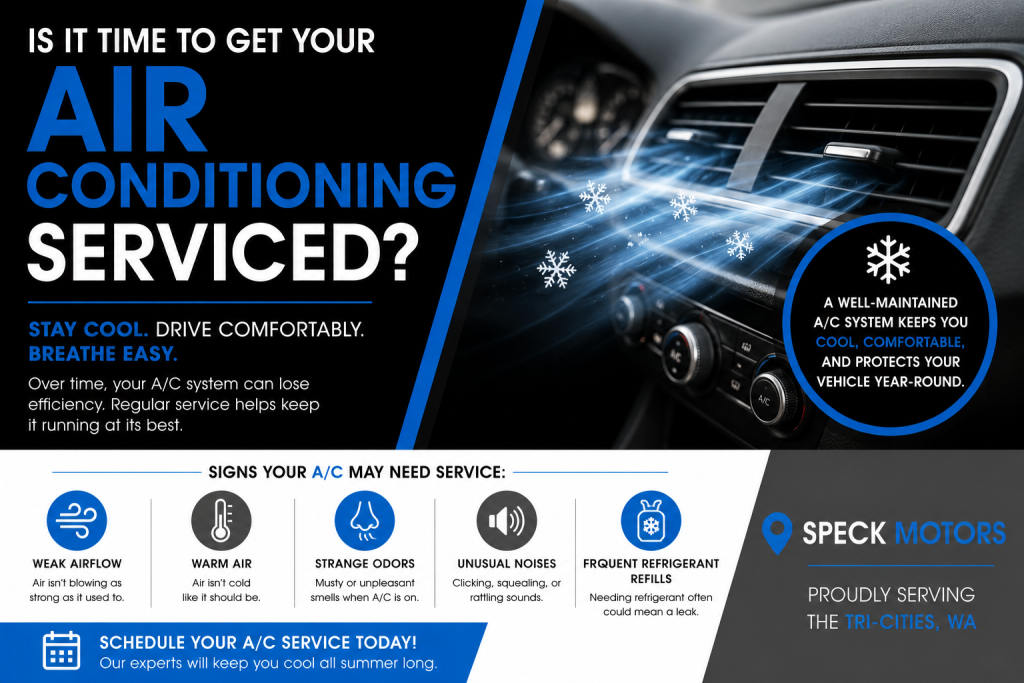
Is It Time to Get Your Air Conditioning Serviced?

Eastern Washington summers are no joke. When temperatures regularly climb into the 90s and 100s, your vehicle's air conditioning isn't a luxury — it's a necessity. If your A/C hasn't been performing the way it used to, it may be time for a professional air conditioning service and AC maintenance check. Here's what to watch for and why it matters. Why A/C Maintenance Matters Regular AC maintenance keeps your system running efficiently, extends the life of key components, and makes sure you're not stuck on a 105°F afternoon with no cold air. A neglected A/C system can also strain your engine, reduce fuel efficiency, and lead to compressor failure — one of the most expensive A/C repairs you can face. Signs Your A/C System Needs Service Warm or Lukewarm Air The most obvious sign. If your A/C isn't blowing cold air — or takes a long time to cool the cabin — your system is likely low on refrigerant or has a leak. Weak Airflow Weak airflow even on the highest setting may point to a clogged cabin air filter, a failing blower motor, or a ductwork issue. Unusual Smells A musty or moldy smell from your vents signals bacterial or mold growth inside the system — often caused by moisture buildup in the evaporator. An AC service appointment can clean and treat the system. Strange Noises When A/C Is On Rattling, banging, or squealing can indicate a failing compressor or loose components. Catching a compressor issue early can save you from a much more expensive repair. Water Inside the Cabin Water pooling near the passenger footwell usually points to a clogged evaporator drain line — which can cause interior water damage if left untreated. A/C Cycling On and Off Rapidly Rapid compressor cycling may indicate low refrigerant, an electrical issue, or a failing pressure switch — all worth addressing promptly. Warning Light Any A/C or cooling system warning light is a signal to get your vehicle checked right away. What's Included in an A/C Service? A professional air conditioning service at Speck Motors includes: Refrigerant level check and recharge if needed Leak inspection, including hoses, connections, and components Compressor inspection Cabin air filter inspection and replacement if needed Blower motor and fan inspection Full cooling system service check How Often Should You Service Your A/C? Most service professionals recommend an A/C inspection every 1–2 years or any time you notice a change in performance. Our team can check your system quickly during your next oil change or multi-point inspection visit. Schedule Your Air Conditioning Service Today If you've noticed any of the signs above — or just want peace of mind before summer peaks — our service team at Speck Motors is here to help. We offer professional air conditioning service and AC maintenance for all makes and models. Schedule online or stop by today — don't let Eastern Washington's summer heat catch you off guard. Schedule Automotive Service The information provided is for general informational purposes only and does not constitute legal, financial, or professional advice. While we strive to provide accurate and up-to-date information, we make no guarantees regarding the completeness, accuracy, or reliability of the information presented. Any action you take based on the context of this blog is strictly at your own risk. Always consult a qualified professional or specialist for advice specific to your situation. We are not responsible for any losses or damages arising from the use of this blog or its content.