




You pull up to the gas pump and stare at three buttons — 87, 89, 91. Most drivers just hit 87 and go. But have you ever wondered what those numbers actually mean? Here's your complete guide to gas pump numbers explained — including octane ratings, fuel grades in Washington State, and what octane actually does for your engine.
What Are the Numbers at the Gas Pump?
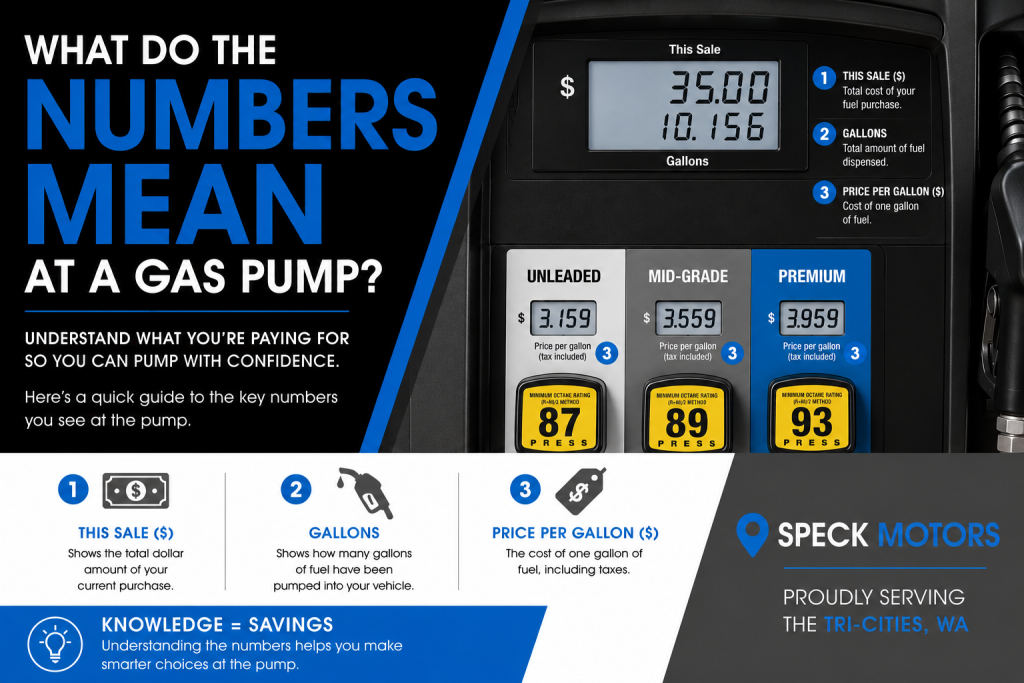
The numbers you see — typically 87, 89, and 91 — are gas octane ratings. They represent the fuel's ability to resist "knocking" or "pinging" during combustion. The higher the number, the more resistant the fuel is to premature ignition inside your engine.
What Is Octane — And Why Does It Matter?
What is octane? It's a measure of a fuel's stability under pressure. Inside your engine, the air-fuel mixture is compressed before being ignited by the spark plug. If the fuel ignites too early, it causes a knocking sound and can damage your engine over time. Higher octane fuel resists that premature ignition better — which matters most in high-performance or turbocharged engines.
Fuel Grades in Washington State
Here's what each gas station fuel grade means:
Regular — 87 Octane
The most common and affordable grade. Recommended for the vast majority of vehicles — including most Chevrolet, GMC, Jeep, Ram, Hyundai, Nissan, and Buick models. If your owner's manual says "regular unleaded," this is your fuel. Using a higher grade won't improve performance or fuel economy — you'll just spend more money for no benefit.
Mid-Grade — 89 Octane
Sits between regular and premium. Some older vehicles may recommend mid-grade — always check your owner's manual. For most modern vehicles, mid-grade offers no meaningful advantage over regular.
Premium — 91 or 92 Octane
Recommended or required for high-performance, turbocharged, or supercharged engines. There's an important distinction:
- "Premium Recommended" — Your vehicle runs fine on regular but may perform slightly better on premium.
- "Premium Required" — Your engine is designed for high-octane fuel. Using regular can cause knocking and long-term engine damage.
Always check your owner's manual or fuel door sticker to know which grade your vehicle requires.
E85 — Flex Fuel
Available at some Washington State stations. E85 is only compatible with Flex Fuel vehicles — using it in a non-flex fuel vehicle can cause serious engine damage. Look for the yellow flex fuel cap to know if your vehicle is compatible.
Does Higher Octane Mean Better Fuel?
No — and this is one of the most common misconceptions about fuel octane ratings. Higher octane fuel is not inherently better or cleaner. It simply resists premature ignition better. Putting 91 in a vehicle designed for 87 will not make it faster or more fuel-efficient. The right fuel is the one your manufacturer recommends — nothing more, nothing less.
Quick Reference — Gas Pump Numbers Explained
- 87 — Regular — For most everyday vehicles
- 89 — Mid-Grade — For select engines that specifically recommend it
- 91/92 — Premium — For high-performance or turbocharged engines
- E85 — Flex Fuel — Only for Flex Fuel vehicles
Not Sure What Fuel Your Vehicle Takes?
Check your owner's manual, the sticker inside your fuel door, or ask our service team at your next visit. Our certified technicians at Speck Motors are always happy to answer questions about your vehicle during your next service appointment. Stop by or schedule online today.